Blog
Glass Bottle Packaging and Transportation Guide: How to Reduce Damage During International Shipping
Transporting glass bottles internationally requires more than standard logistics planning. As fragile food-grade packaging materials, glass bottles must be protected throughout manufacturing, storage, and long-distance transportation.
With increasing global trade in spirits and beverages, understanding professional packaging and shipping methods can significantly reduce breakage risks and improve supply chain reliability.
International Transportation Methods for Glass Bottles
Small orders or samples are typically delivered via international air express services, which usually arrive within 3–7 days depending on destination.
Bulk glass bottle orders are commonly transported by:
-
Sea freight (most cost-efficient)
-
Land transportation after port arrival
-
Combined multimodal logistics
Shipping time varies based on port schedules, customs clearance, and seasonal logistics demand.
Typical Shipping Timeline
A standard export order generally follows this timeline:
-
Bottle production & inspection
-
Packaging preparation
-
Container loading
-
Ocean transportation (20–35 days)
-
Inland delivery to warehouse
Transportation often accounts for over 60% of total order time, making packaging quality critically important.
How Professional Packaging Reduces Glass Bottle Damage
After years of export experience, professional manufacturers adopt optimized packaging systems designed specifically for fragile cargo.
Well-designed packaging can control annual breakage rates to below 1% during international shipments.
For example:
-
A 40HQ container may load approximately 50,000 units of 750ml glass bottles
-
Long sea transportation may last around 30 days
-
Proper packaging minimizes vibration and collision risks
Wooden Pallet Standards for Export Glass Bottles
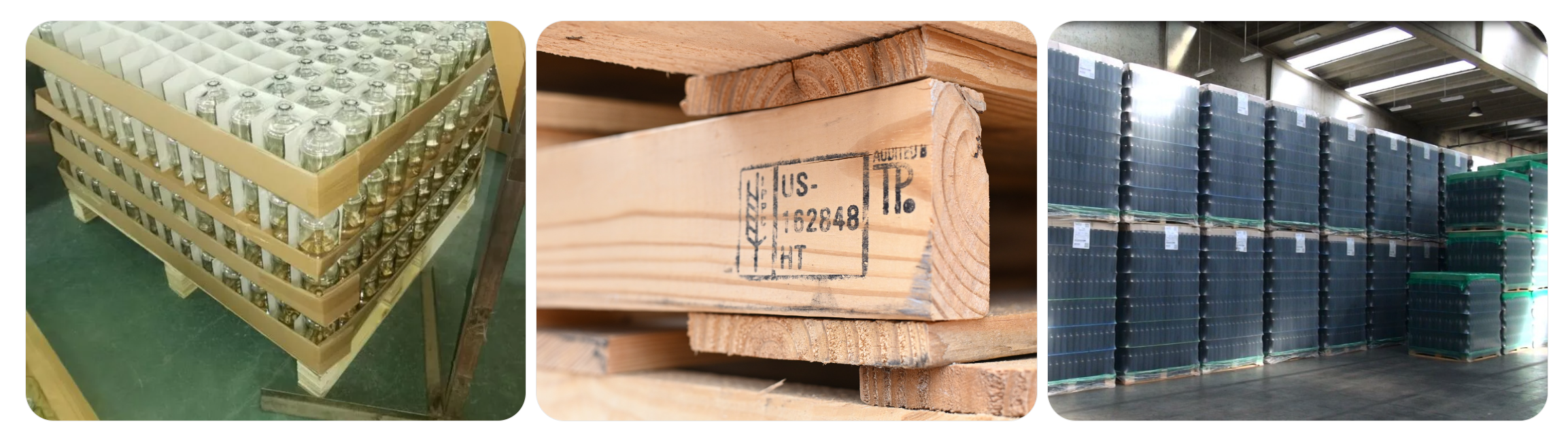
High-quality pallets play a key role in shipment stability.
Professional pallet production includes:
1. Certified Wood Selection
International-standard materials such as pine or spruce ensure structural strength.
2. Heat Treatment & Protection
Wood undergoes anti-mold and anti-insect treatment compliant with ISPM-15 export standards.
3. Precision Cutting
Dimensions are standardized to ensure compatibility with global logistics systems.
4. Structural Assembly
Reinforced fixing methods improve load-bearing capacity.
5. Surface Processing
Sanding and finishing ensure hygiene compliance for food packaging transport.
Customized Carton Packaging for Glass Bottles
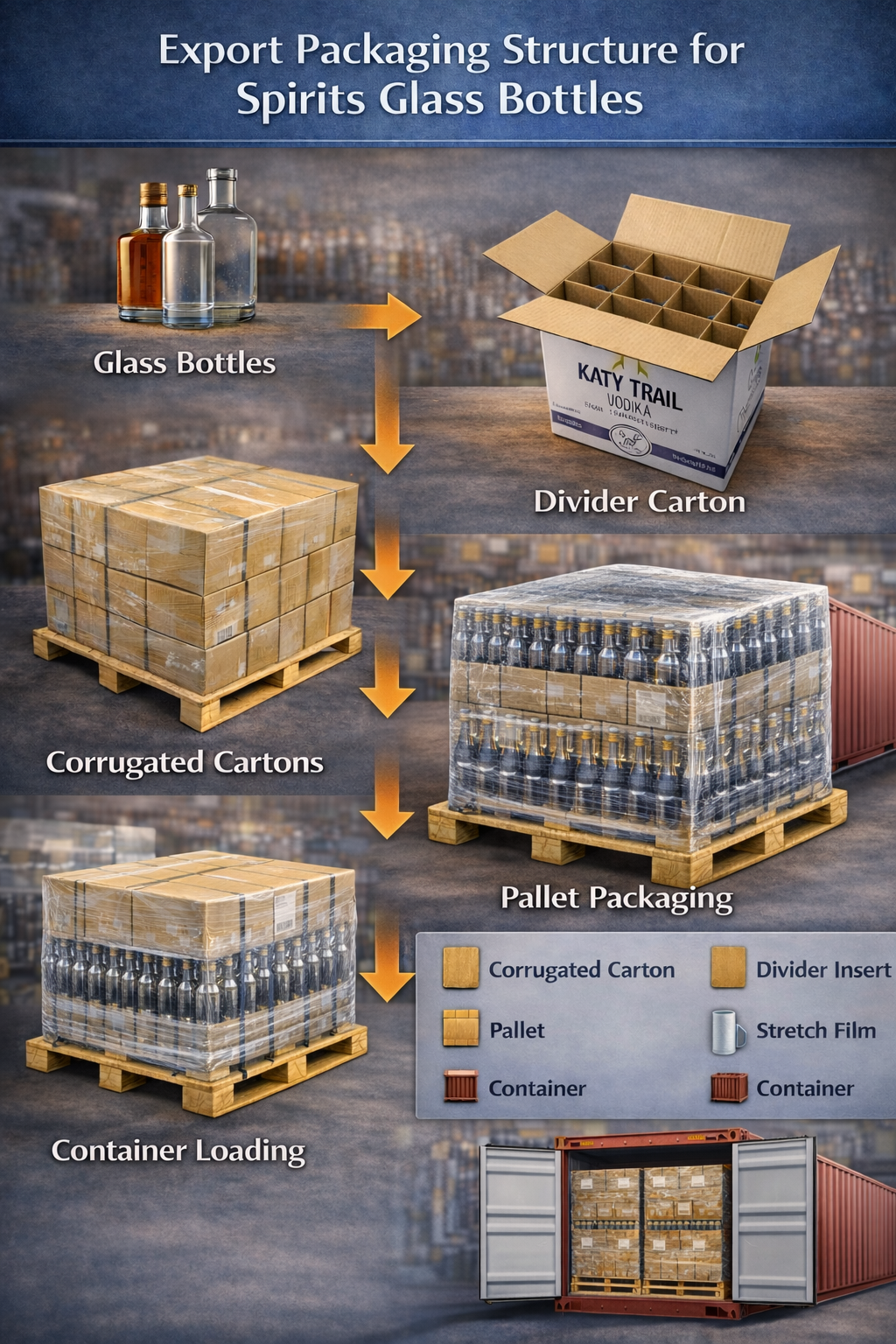
Unlike ordinary cartons, export glass bottle packaging is custom-designed.
Key features include:
-
Five-layer reinforced corrugated cartons
-
Internal partitions separating each bottle
-
Shock absorption design
-
Reduced friction between bottles
Proper spacing prevents shaking and collision during transportation.
Container Inspection Before Shipment
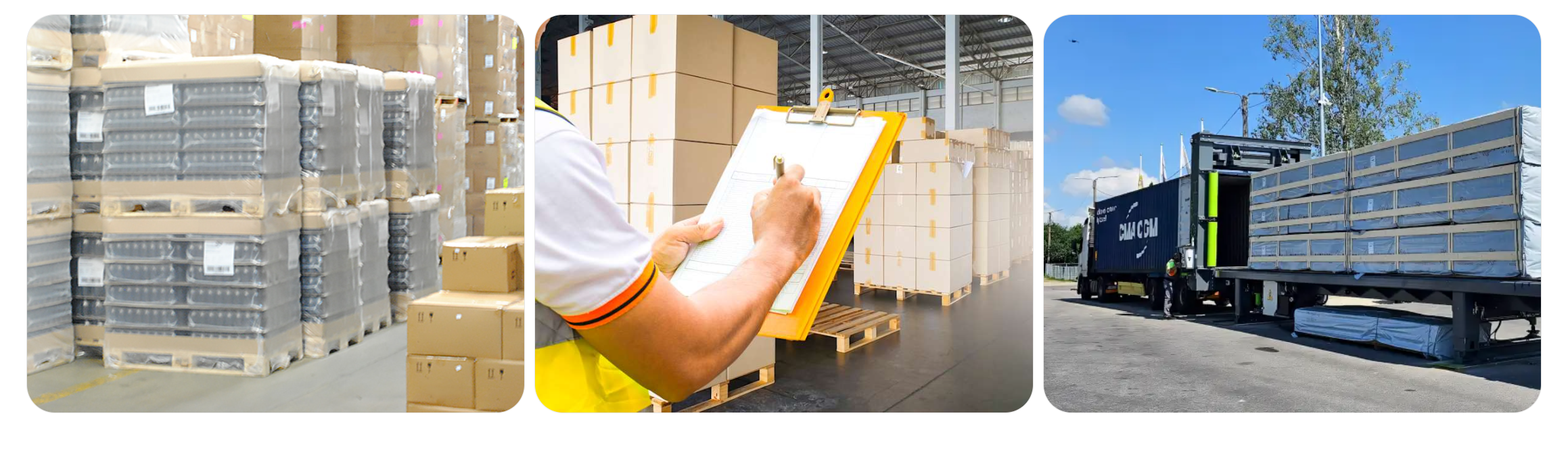
Container condition directly affects shipment safety.
Professional exporters conduct:
-
Container age inspection
-
Structural damage checks
-
Interior cleanliness verification
-
Air circulation preparation
-
Temperature difference control during loading
These procedures reduce environmental risks during long ocean voyages.
Why Experience Matters in Glass Bottle Export
Glass bottle transportation involves many small operational details that significantly influence final delivery quality.
Without export experience, risks may include:
-
Improper pallet stacking
-
Temperature stress cracks
-
Container moisture damage
-
Excess vibration during transit
Experienced suppliers apply preventive controls at every stage of logistics.
Storage Recommendations After Arrival
After glass bottles arrive at the warehouse:
-
Store in dry, ventilated environments
-
Avoid rapid temperature changes
-
Keep pallets elevated from ground moisture
-
Maintain stable stacking height
Proper storage ensures bottles remain production-ready for filling lines.
Work With an Experienced Glass Bottle Manufacturer
Choosing a supplier with strong export packaging expertise helps reduce logistics risks and hidden costs.
If you would like professional recommendations on glass bottle packaging, shipping solutions, or customization services, feel free to contact our team for consultation.
Contact us to get packaging solutions for your next glass bottle order.